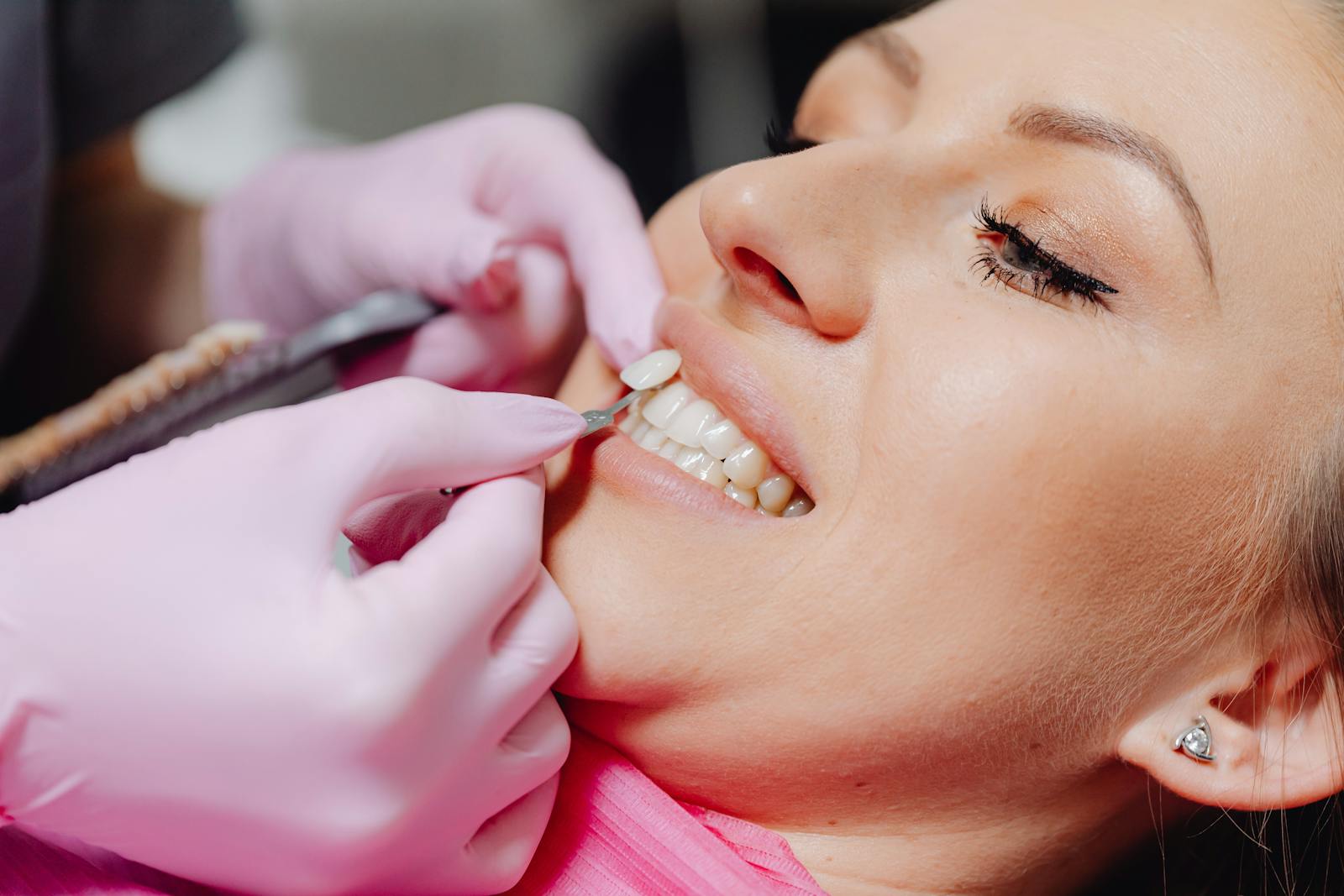
Composite Bonding – What is it?
Composite bonding is the fastest way to transform your smile, with the treatment taking place in the dentist chair, completed within one appointment. This treatment uses a tooth-coloured resin that is applied to your teeth surface, shaping it by hand. This means you don't have to wait for the lab to finish, making it a safe, reversible and fast treatment option.
What are Porcelain Veneers?
Porcelain veneers, on the other hand, or ultra-thin porcelain shells that are custom made to your smile in a dental laboratory. They are bonded to the surface of your teeth. These are not reversible, they are a permanent solution, as it gently removes a small amount of tooth enamel, creating the perfect bonding surface. While a lifelong commitment, porcelain veneers, are harder and stain-resistant, lasting longer.
Composite Bonding vs Porcelain Veneers
Composite bonding and porcelain veneers both offer excellent benefits, helping to transform your smile, fixing cracked, chipped or misaligned teeth seamlessly. The key differences include:
- Lifespan — Porcelain veneers come out on top when it comes to longevity. On average you can expect porcelain veneers to last between ten and fifteen years, if not more with good care, while composite bonding can last up to seven years.
- Price — Composite bonding is considerably cheaper per tooth than porcelain veneers, as they do not include laboratory fees.
- Reversible — Due to the fact that a small amount of enamel needs to be removed from each tooth for porcelain veneers, they are not reversible, making them a lifelong commitment. At the same time, composite bonding is completely reversible.
- Stain Resistant — Your teeth can stain from drinking tea, coffee, or red wine. Porcelain veneers are more stain resistant than composite bonding.
- Number of Appointments — Composite bonding is a fast treatment that can be completed within one appointment. Porcelain veneers, on the other hand, need a minimum of two appointments.
- Repair — Chips to your composite bonding can usually be repaired quickly in the dentist chair, where chipped veneers usually require replacement.
Which Treatment Should I Choose?
While both are highly effective in repairing chipped, discoloured, or misaligned teeth, they are best suited for different patients:
Composite bonding – suitable for minor chips and fractures, small gaps, mild misalignment, along with discolouration that didn't respond to teeth whitening
Porcelain veneers – suitable for larger size and shape corrections or major discolouration, along with those with worn-down teeth that need significant restoration
Conclusion
Whether you choose composite bonding or porcelain veneers is determined by your teeth, goals, budget, and personal preferences. A large number of EyeSmile patients start with composite bonding, seeing if they are happy with the results, before deciding on porcelain veneers at a later stage. Our recommendation is to make an appointment for a one-on-one consultation with our cosmetic dentist, where we can assess your teeth, discuss your goals, and provide you with the best option based on a thorough examination. Contact EyeSmile today to book your consultation with one of our cosmetic dentists without delay.
Written by the EyeSmile clinical team — dental and optical clinicians in Whitton, Twickenham. This article is for general information only and does not constitute clinical advice.
Book an appointment →